
Finding and measuring the correct shipping bag size is a great move for you and the environment. When you buy the size closest to your needs, you save money by purchasing a smaller product. You are also helping to decrease your overall carbon footprint by using less material.
But how to measure a bag? The following Colony Packaging & Machine guide outlines various scenarios to guarantee you are measuring bags for shipping and fitting your product appropriately.
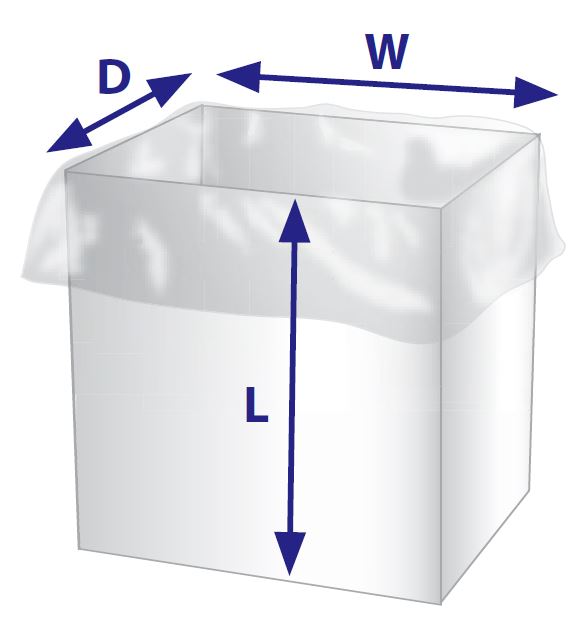
Box Liner – Gusseted
Box liner bags are gusseted to fit square edges and expand with contents. Measuring bags for shipping allows proper coverage.
Note: Depth is the shorter of the two sides
1. Bag Width = Box Width + 1″
2. Bag Depth = Box Depth + 1″
3. Bag Length = Box Height + Box Depth + 6″ to cover contents and tie the bag closed
Example: Box size 18″W x 12″D x 14″L
Bag size 19″W x 13″D x 32″L
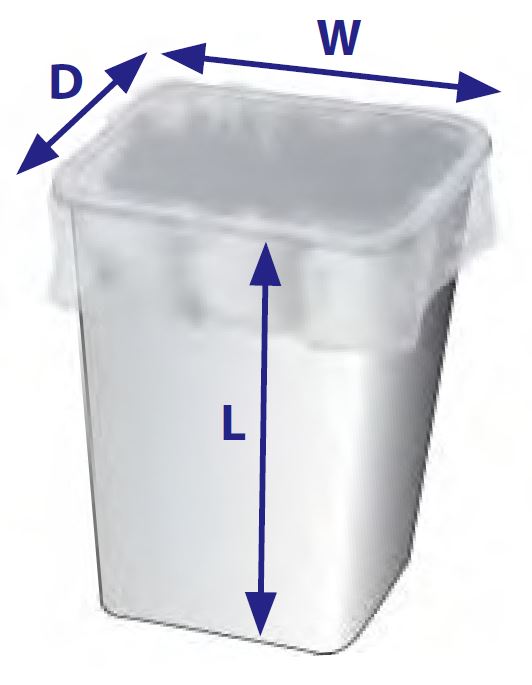
Container Liner – Layflat
Container liners are layflat, making them easier to size but still critical to get right. Accurate measurements prevent waste.
Note: Depth is the shorter of the two sides
1. Bag Width = Container Width + Container Depth + 2″ for a looser fit
2. Bag Length = Container Height + Container Depth + 6″ to cover contents and tie the bag closed
Example: Container size 14″W x 10″D x 32″L
Bag Size 26″W x 48″L
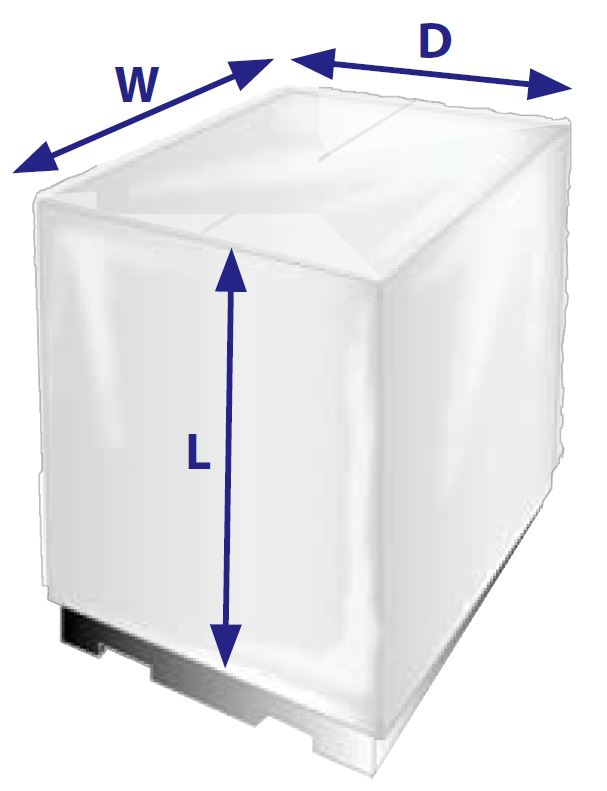
Pallet Cover – Gusseted
Pallet covers have gussets that allow them to drape and protect large loads. Learn how to measure a bag like this before wrapping your shipment.
Note: Depth is the shorter of the two sides
1. Cover Width = Pallet Width + 2″
2. Cover Depth = Pallet Depth + 2″
3. Cover Length = Pallet Height + 1/2 Pallet Depth
Example: Pallet Size 40″W x 36″D x 50″L
Cover Size 42″W x 38″D x 68″L
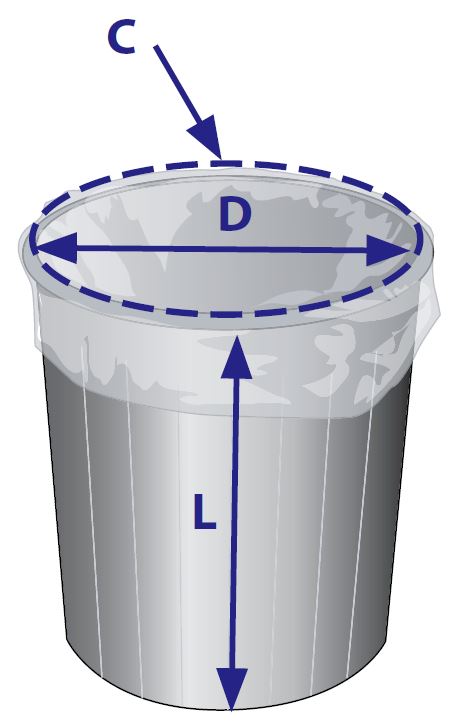
Round Container – Layflat
Round container liners are layflat, so width and length need to be precise. This keeps them snug without any unnecessary overhang. For specific needs, ask us for a custom bag size quote.
1. Container Circumference = Diameter x 3.14
2. Bag Width = Container Circumference divided by 2, +1″ for a looser fit
3. Bag Length = Container Height + Container Diameter + 5″ for overhang
Example: Container Size 12″D x 20″L
Bag Size 20″W x 47″L
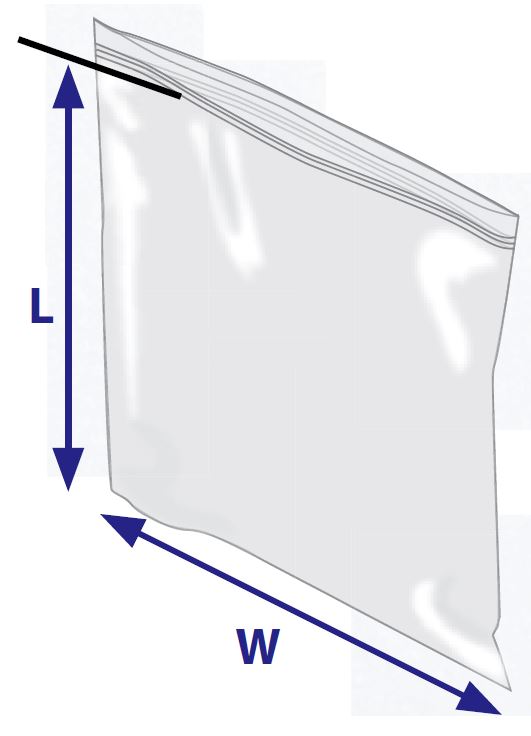
Reclosable Bags
Reclosable bags work best with properly measured bags for shipping. This enables repeatable results across product lines.
1. Measure length (L) from the bottom of the bag to the base of the reclosable seal
2. Measure width (W) of the bag from side to side
3. For rigid items, add 1/2″ to the width (W) of the bag to allow the item to fit through the opening
4. For thick or bulky items adjust accordingly
5. Add 1/2″ to 2″ to both dimensions for a looser fit
Example: For a flat product 3-1/2″ wide x 5-1/2″ deep, the bag dimensions should measure at least 4″W x 6″L
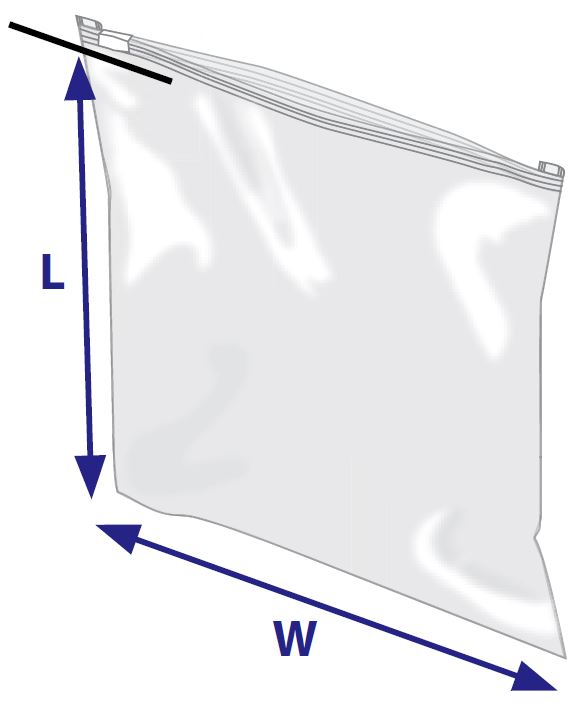
Slider Top Bags
Slider top bags are easy to seal. Make sure you know how to measure a bag like this to avoid overstuffing or wasted space.
1. Measure length (L) from the bottom of the bag to the base of the reclosable seal
2. Measure width (W) of the bag from side to side
3. For rigid items, add 1/2″ to the width (W) of the bag to allow the item to fit through the opening
4. For thick or bulky items adjust accordingly
5. Add 1/2″ to 2″ to both dimensions for a looser fit
Example: For a flat product 3-1/2″ wide x 5-1/2″ deep, the bag dimensions should measure at least 4″W x 6″L
By following these steps and understanding how each bag type varies, you’ll master how to measure a bag for shipping. For top industrial packaging solutions, contact Colony Packaging. Let us help you ship smarter.